Imagine driving to a place you’ve never visited before. Without Google Maps, you’ll probably take a few wrong turns. Preparing for IELTS without a study plan is exactly the same. You might study hard but still end up lost. Think of this guide as your GPS—it will take you from “Where do I start?” to “I’m ready for my exam.” Don’t worry! Almost every beginner starts with enthusiasm but ends up confused by too many books, videos, and pieces of advice. The good news? You don’t need 100 resources—you need one clear roadmap. Now the question is- If you’re thinking about IELTS today, should you enroll in a course tomorrow? The answer is “No.”
Thinking about IELTS is a fantastic first step, but joining a course immediately without building your foundation is not the wisest decision. IELTS is not like your school or college exams. It requires long-term effort, patience, consistency, and smart planning.
Now, let’s move on to the next step.
Build Your Foundation First
Before starting your IELTS journey, spend some time strengthening your English foundation. Remember:
“The stronger your English foundation, the easier every IELTS question becomes.”
Now, I would like to share a 45-hour foundation-building plan. Sounds impossible? Not really.
Let’s say, you’ve decided to spend 30 days preparing your foundation. To complete 45 hours in 30 days, you only need to study 1.5 hours every day.
Now, answer this honestly:
Is 1.5 hours a day really too much? Probably not.
So, how should you spend those 90 minutes?
Let’s break it down.
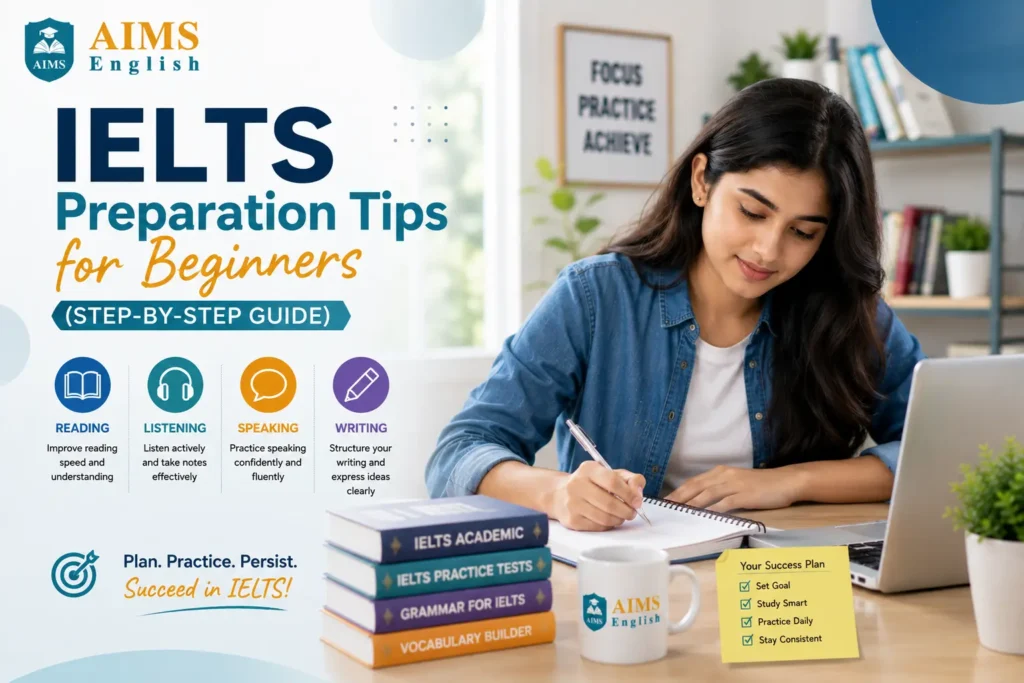
Listening (20 Minutes)
Listening is one of the four IELTS modules. Many students enjoy it, but for others, it can be quite challenging. Native accents often go over their heads, making it difficult to understand what speakers are saying.
To improve your listening skills, spend at least 20 minutes every day listening to native English speakers.
Does that mean you should listen to English songs?
Not necessarily.
Instead, listen to authentic English content from sources like BBC Learning English, TED Talks, or English Fairy Tales.
Remember, you learned your native language mainly by listening. English works the same way.
Reading (30 Minutes)
Reading is one of the biggest challenges for many IELTS candidates. According to experience, many students fail to achieve their target score—especially Band 5.5 or 6.0—because they struggle to understand sentence meanings.
One major reason is simple:
They don’t have a regular reading habit.
Before starting IELTS preparation seriously, spend 30 minutes every day reading something in English.
You can read magazines like Fortune or Forbes, or books such as Atomic Habits, Productive Muslim, or any book that genuinely interests you.
Consistent reading will improve your comprehension and expose you to a wide range of academic vocabulary.
Writing (20 Minutes)
So far, we’ve spent 50 minutes on Listening and Reading.
Now, let’s dedicate 20 minutes to Writing.
Many IELTS candidates struggle with basic sentence structure, grammar, idea generation, and coherence. The best way to improve is simple:
Start writing today.
Don’t begin with difficult topics.
Instead, write about easy and familiar subjects, such as:
Your mother
Your best friend
Your school or college
Your favourite app
Your daily routine
Your free-time activities
When you’re doing free writing:
Forget grammar.
Forget fancy vocabulary.
Forget perfect spelling.
Forget extraordinary ideas.
Just enjoy writing.
The goal is to build the habit first. Accuracy can come later.
Speaking (20 Minutes)
The final 20 minutes should be dedicated to Speaking.
Among the four skills, speaking is often the one that leaves the strongest impression. However, beginners usually struggle because of limited vocabulary, lack of confidence, thinking in their native language, hesitation, frequent pauses, and fear of making mistakes.
This is why many teachers introduce the Speaking module first. Unfortunately, many students become discouraged after facing these initial challenges and eventually give up.
Don’t let that happen to you.
Before starting your IELTS preparation, spend at least 20 minutes every day speaking in English.
Choose easy topics like:
Your mother
Your room
Your favourite teacher
Your school
Your mobile phone
Your favourite sportsperson
Practice with a friend whenever possible.
Don’t have a speaking partner?
Use language exchange apps like Hallo, or simply record your own voice and listen to it later.
Remember:
The more you speak, the more confident and fluent you become.
Final Words
Don’t rush into IELTS preparation without a plan.
Spend 45 hours building your English foundation first, and you’ll notice a huge difference when you finally begin your IELTS journey.
Study smart. Stay consistent. Trust the process.
A strong foundation today will become your high band score tomorrow.