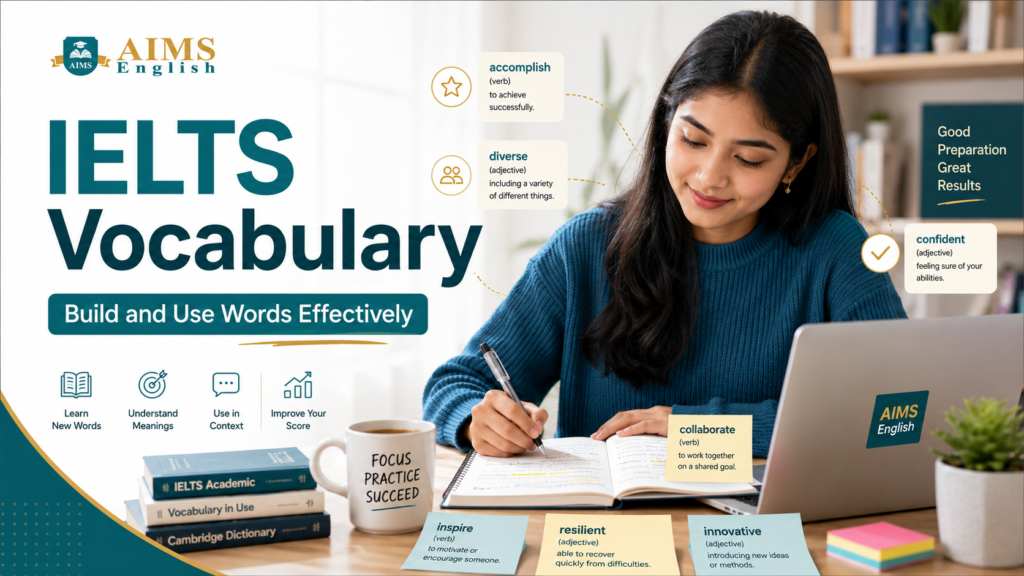
Vocabulary is a crucial component of success in the IELTS. Without a good command of vocabulary, it can be difficult to convey your ideas clearly and precisely on the exam. This article will discuss why vocabulary is so important for the IELTS and provide strategies for building and using your vocabulary effectively.
Why Is Vocabulary Important in the IELTS?
In the IELTS, you will be tested on your ability to understand and use a wide range of vocabulary. The test assesses your ability to use words and phrases accurately and appropriately and to demonstrate your knowledge of collocations, idioms, and phrasal verbs. A strong vocabulary will help you express your ideas more effectively and achieve a higher score on the exam.
Strategies for Building Your Vocabulary
- Read Widely
One of the best ways to build your vocabulary is to read widely. Choose books, articles, or online resources on a variety of topics, and make note of new words and phrases as you encounter them. Try to read material that is slightly above your current level of English to challenge yourself and learn new vocabulary.
- Use Vocabulary Building Tools
There are many vocabulary-building tools available online, such as flashcards, word games, and quizzes. Find a tool that works for you and use it regularly to build your vocabulary. Some popular tools include Quizlet, Duolingo, and Memorize.
- Learn Words in Context
Learning new words in context is important, rather than simply memorizing definitions. When you encounter a new word, try to understand its meaning based on the surrounding words and phrases. This will help you remember the word more effectively and use it correctly in context.
- Practice Using New Words
Practice using new words in sentences or conversations to help you remember them. Try to use new words in context to reinforce their meaning and usage. You can also keep a vocabulary journal to record new words and practice using them in sentences.
Strategies for Using Vocabulary Effectively on the Exam
- Use Collocations
Collocations are words that commonly occur together in English. Using collocations correctly can help you sound more natural and fluent. Make sure to practice using collocations when preparing for the exam.
- Use Idioms and Phrasal Verbs
Idioms and phrasal verbs are commonly used in English and can help you express yourself more effectively. However, it’s important to use them correctly and appropriately. Make sure to learn idioms and phrasal verbs in context and practice using them in sentences.
- Avoid Repetition
Try to avoid repeating the same words or phrases throughout your speaking or writing. Use synonyms or different expressions to convey the same meaning. This will demonstrate your range of vocabulary and help you achieve a higher score on the exam.
- Practice Skimming and Scanning
The IELTS Reading test includes passages that are often dense and complex. Practice skimming and scanning techniques to quickly identify key information and vocabulary. This will help you save time and ensure that you are able to answer all of the questions within the allotted time.
In conclusion, vocabulary is a crucial component of success in the IELTS. Follow these strategies for building and using your vocabulary effectively to achieve a higher score on the exam. Remember to read widely, use vocabulary-building tools, learn words in context, practice using new words, use collocations, idioms, and phrasal verbs correctly, avoid repetition, and practice skimming and scanning techniques. Good luck on your IELTS journey!